When the summer ends, many homeowners assume their awning needs to stay closed until spring.
But that isn't necessarily the case.
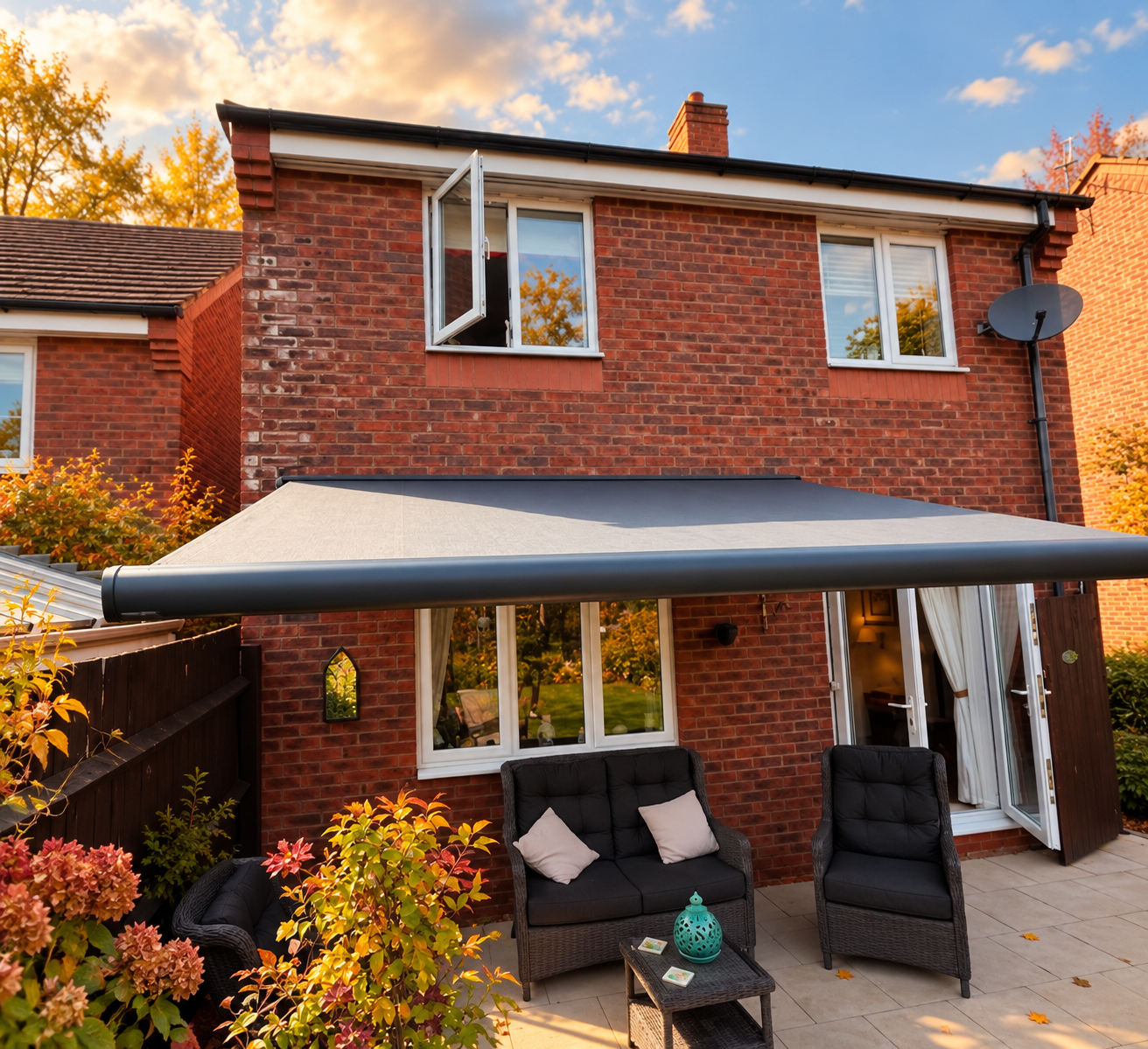
A good quality retractable awning can still be useful during autumn and even on the right winter days. The key is understanding when to use it, when to retract it and how to look after the fabric and framework as the weather becomes wetter and windier.
For homeowners across Sheffield, Doncaster, Barnsley, Rotherham and the surrounding areas, here are some straightforward ways to make the most of your awning while protecting it through autumn and winter.
Your awning isn't only for hot summer days
We naturally associate awnings with summer sunshine, but the sun doesn't disappear when September arrives.
In fact, as the sun sits lower in the sky during autumn, glare can become particularly noticeable through patio doors, large windows and bifold doors.
Extending an awning can provide useful external shading before that sunlight reaches the glass, helping to create a more comfortable room inside as well as shade on the patio.
And on a calm, bright autumn afternoon, an awning can still help make the garden a more pleasant place to sit.
So there is no need to automatically stop using your awning just because summer is over.
Watch the wind
The biggest consideration during autumn and winter is often wind.
A large extended awning naturally catches the wind, which can place significant pressure on the fabric, folding arms, brackets and fixings.
If stronger winds are expected, retract the awning rather than leaving it extended unattended.
This is particularly important during autumn, when conditions can change quickly.
Some motorised awnings can be combined with wind sensors, allowing the awning to retract automatically when movement or wind conditions reach a set level.
However, sensors shouldn't replace common sense. If the weather is deteriorating, bringing the awning back into its cassette is normally the sensible option.
Can an awning be used in the rain?
Most retractable patio awnings are primarily designed to provide sun protection rather than permanent rain cover.
Some systems and fabrics can cope with light rain, particularly when the awning has been installed with sufficient pitch for water to run away.
Heavy or prolonged rain is different.
Water should never be allowed to collect or form a large pool on the fabric because of the extra weight this can place on the awning.
Always follow the guidance for your particular awning system.
If what you really need is regular protection from the rain rather than occasional shade, a more permanent canopy or alternative outdoor living solution could sometimes be a better option.
Don't leave damp fabric rolled away for longer than necessary
British weather means there will occasionally be times when an awning has to be retracted while the fabric is still damp.
If that happens, try to extend the awning again once conditions improve and allow it to dry naturally.
Leaving damp fabric rolled away for long periods can encourage staining, dirt and mildew.
The simple principle is the same as with most outdoor fabrics: clean and dry is best before long-term storage.
Clear away autumn leaves and debris
Autumn leaves can easily settle on an extended awning.
Before retracting it, have a quick look across the fabric and remove any leaves, twigs or loose debris.
It's also worth checking around the cassette and framework occasionally.
A soft brush is normally sufficient for removing loose dirt.
Avoid harsh household chemicals, abrasive cleaning products and pressure washing unless specifically approved by the fabric or awning manufacturer. These can damage protective finishes or mark the fabric.
Give the awning a quick visual check
You don't need to dismantle anything to keep an eye on the condition of your awning.
Simply pay attention to how it looks and operates.
Things worth noticing include:
- fabric that is beginning to fray or wear
- unusual creases or sagging
- excessive movement
- damaged components
- unusual noises when opening or closing
- an awning that no longer extends evenly
If something suddenly looks or sounds different, it is better not to repeatedly operate the awning until the cause has been identified.
What does a full cassette awning do in winter?
A full cassette awning offers excellent protection when the system is closed.
As the awning retracts, the fabric and folding arms are enclosed inside the cassette housing.
This helps protect them from rain, dirt and general winter weather while the awning isn't being used.
It is one of the reasons full cassette awnings are such a popular choice for homes in South Yorkshire, where the weather can change considerably throughout the year.
You can see some of the different options available on our awnings page.
Should you keep an awning closed throughout the whole winter?
During prolonged periods of poor weather, keeping a retractable awning safely closed makes sense.
But that doesn't mean you can't use it at all.
On a calm, dry winter day, you may still want to extend the awning for shade or simply to check that everything is operating correctly.
Just remember that winter weather can change more quickly and that wind, frost, snow and heavy rain need to be taken seriously.
Autumn is a good time to look at the condition of the fabric
Awning fabrics are designed for outdoor use, but like any exterior material they can eventually begin to show their age.
Take a look at the fabric while the awning is extended.
You may notice:
- fading after years of sunshine
- marks or staining
- wear around the edges
- deterioration around seams
- a colour or pattern that now looks dated
Importantly, tired fabric does not always mean the entire awning needs replacing.
If the framework and mechanism remain in good condition, an awning recover may sometimes be possible.
Replacing the fabric can completely refresh the appearance of an existing awning and gives you the opportunity to choose a new colour or design.
Is your existing awning still right for the way you use your garden?
Autumn is also a useful time to think about how well your awning has worked during the summer.
Did it provide enough shade?
Would a greater projection have covered more of your patio?
Did the shade reach your bifold or patio doors when you needed it?
Would motorisation have made it easier to use?
Would integrated lighting help you enjoy the patio later in the evening?
Sometimes an older awning is perfectly adequate. At other times, changes to the garden or the way you use your outdoor space mean a different specification would work better.
Planning during the quieter months gives you time to consider the options before the warmer weather returns.
Made-to-measure awnings across South Yorkshire
South Yorkshire Awnings supplies and installs made-to-measure retractable awnings across Sheffield, Doncaster, Barnsley, Rotherham and surrounding areas.
Every property is different, which is why the size of the awning, projection, fixing position and available shade should all be considered before choosing a system.
Whether you're thinking about your first awning, replacing an older system or refreshing the fabric on an existing awning, we can help you consider the options.
Thinking ahead to next spring?
If this summer showed you that your patio needs more shade, autumn and winter are a good time to start planning.
Visit our awnings page to find out more about made-to-measure awnings from South Yorkshire Awnings.